

Keynote Speeches
Keynote Speeches
Supply Chain Management and Digitalization
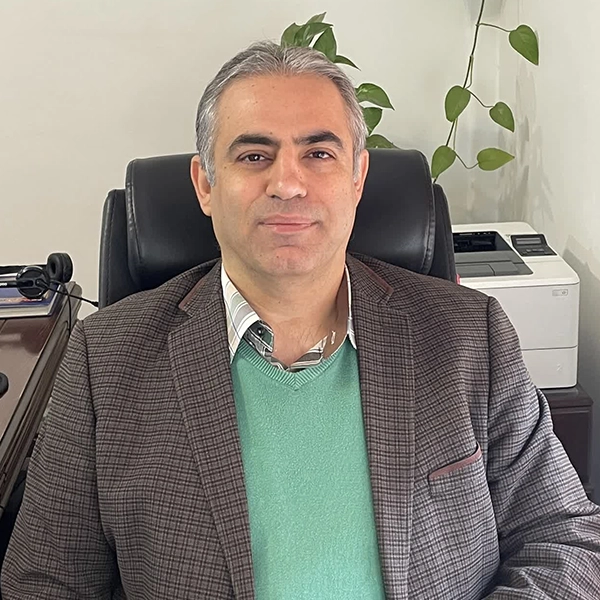
Prof. Mehdi Seifbarghy
Department of Industrial Engineering, Alzahra University, Iran
Abstract of the Speech:
Considering the digitalization trend in business and operations, this speech tries to highlight and deepen the contributions and our understanding on digitalization and supply chain management by focusing on Industry 4.0 applications, implementation challenges, and future trends Prof. 4th industrial revolution is known through cyber-physical production systems which merges real and virtual worlds. While in some ways it’s an extension of the computerization of the 3rd Industrial Revolution (Digital Revolution), the important characteristic of Industry 4.0 is cyber-physical systems that connect real worlds to virtual one in tremendous speed. The major technologies driving Industry 4.0 are Additive Manufacturing (AM), Augmented Reality (AR), Autonomous Robots, Big Data and Analytics (BDA), Cloud Computing, Cybersecurity, Blockchain Technology, the Industrial Internet of Things (IIoT), and Simulation.
Supply Chain refers to a network of companies that together create the chain of production and the delivery of a product or service. There are many components of a supply chain, including: producers, vendors, warehouses, transport companies, and distributors. The biggest challenge of the traditional supply chains was managing their communication. As a result, the supply chains used to operate with much less efficiency. In this regard, the impact of Industry 4.0 on the supply chain is profound. Integrating Industry 4.0 in the supply chain has connected the missing dots from procurement to the final delivery. It creates an agile supply chain that responds to real-time customer needs. There are many benefits for supply chain management in Industry 4.0 including Improved efficiency, optimum resource utilization, lower costs, prompt customer service, adapt quickly, saves time & effort, enhanced visibility, and better integration & collaboration. In this talk, we will try a suitable image of the mentioned benefits of the integration of Industry 4.0 and supply chain management called supply chain digitalization.
Short Bio:
Mehdi Seifbarghy is a Professor in the Department of Industrial Engineering at Alzahra University of Iran. In teaching, he has been focusing on facility location problems and supply chain management and analytics. In research, his current interests include location and supply chain management, inventory control, machine learning and fuzzy modeling of optimization problems. Dr. Seifbarghy received his PhD degree in Industrial Engineering from Sharif University of Technology, Tehran, Iran. He has been the guest editor of the Digital Business Journal of Elsevier for the special issue of Industry 4.0 and Supply Chain Management.
Keynote Speeches
From Models to Decisions: Prescriptive AI in the Age of Generative and Agentic AI
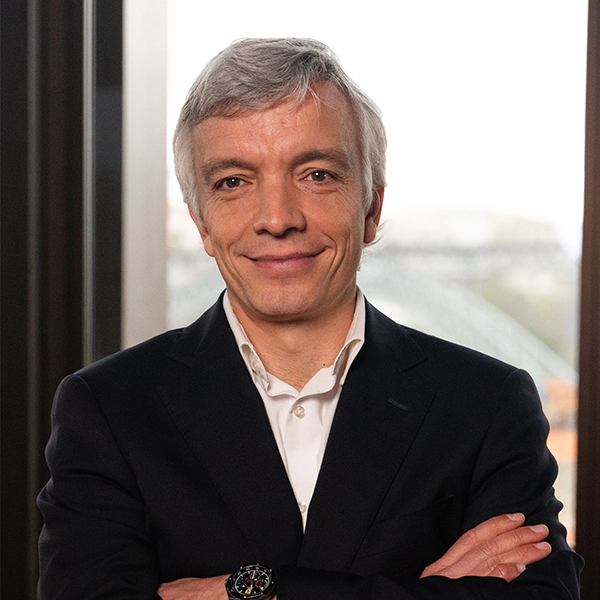
Prof. Bernardo Almada Lobo
FEUP- Faculty of Engineering of University of Porto, Portugal
Short Bio
Full Professor of Industrial Engineering and Management at the Faculty of Engineering of University of Porto (FEUP). Co-founder and Partner at LTPlabs, a Business AI company. Member of the Board of Trustees of the Belmiro de Azevedo Foundation. Member of the Academy of Engineering. Former Board Member of INESC TEC and Researcher at the MIT Sloan School of Management. Prof. Bernardo Almada Lobo holds a BEng, PhD and Habilitation in Industrial Engineering and Management from FEUP. Completed the Advanced Management Programme at INSEAD, and the Mergers and Acquisitions at London Business School. Certified Analytics Professional (CAP) by INFORMS.
His area of activity is Business Analytics and Artificial Intelligence. He researches, develops and implements analytical models and methods to support decision-making, solving management problems across various domains — manufacturing, consumer goods, retail and transport — with a particular focus on Operations Management and the Operations–Marketing interface.
He has coordinated and participated in more than 300 development, consultancy and research projects funded by private organisations, science agencies from several countries, the European Commission and regional bodies. He has published more than 100 scientific articles and is co-author of the book Analytics Sandwich: Bringing People and Artificial Intelligence Together to Unlock Business Value. He has supervised more than 20 doctoral theses.
Abstract
Prescriptive AI, grounded in mathematical optimisation and operations research, addresses complex business decisions involving limited resources, multiple options and competing objectives. This talk examines the full decision pipeline, from problem framing and model formulation to implementation, monitoring and organisational adoption.
The success of prescriptive AI depends not only on algorithmic sophistication, but also on how effectively real-world decision contexts are translated into formal optimisation models. This remains a major bottleneck: objectives may be ambiguous, constraints tacit or incomplete, data fragmented, and the operational impact of recommendations poorly understood. Consequently, technically sound models can still fail to deliver value.
Bridging the gap between optimisation theory and practice requires moving beyond one-off model building towards an operational lifecycle in which models are stress-tested, embedded in workflows, monitored and revised as conditions change.
Generative and agentic AI offer new ways to support this lifecycle. Generative AI can help capture decision-maker preferences, structure operational knowledge, draft candidate formulations and explain model outputs. Agentic AI can orchestrate workflows involving formulation, solver-code generation, execution, debugging, infeasibility diagnosis, sensitivity analysis and human review. These technologies do not replace optimisation expertise; instead, they create a new interface between human judgement, analytical modelling and computational decision support.
Keynote Speeches
A Chebyshev Approximation Algorithm for Optimal Control problems governed by DE and DAE Systems

Prof. Kok Lay Teo
Professor, Sunway University, Malaysia -John Curtin Distinguished Emeritus Professor, Curtin University, Australia
In collaboration with Di Wu, Changjun Yu, and Hailing Wang
Abstract
This talk presents a unified computational framework for solving constrained optimal control problems governed by nonlinear ordinary differential equations (ODEs) and differential-algebraic equations (DAEs). The proposed approach combines a proximal-point algorithm with global Chebyshev polynomial approximations to achieve both numerical robustness and high accuracy.
For ODE-constrained problems, the method iteratively linearizes the dynamics and constraints about the current solution estimate. Each resulting linearized subproblem is discretized using Chebyshev series expansions for both the state and control trajectories. Importantly, the time-dependent coefficient functions that appear in the linearized dynamics are also represented by Chebyshev series. Leveraging the analytic properties of Chebyshev polynomials, each subproblem is transformed into a finite-dimensional nonlinear program with only linear equality constraints, which can be solved efficiently via standard optimization solvers. A notable advantage of this formulation is that any feasible solution satisfies the dynamic equations exactly over the entire time horizon, thereby eliminating discretization errors in the dynamics.
The framework is then extended to the more challenging class of nonlinear optimal control problems subject to DAE constraints, where the primary difficulty arises from the presence of algebraic equations. As in the ODE case, the algorithm generates a sequence of subproblems, each approximated using Chebyshev expansions for the state, algebraic variables, controls, and system coefficients. This reformulation first yields a semi-infinite program, which is subsequently reduced—through the properties of Chebyshev polynomials—to a constrained optimization problem with only linear equality constraints. The resulting solution is guaranteed to satisfy the linearized dynamics at every time point, and the iterative procedure is continued until convergence is achieved.
The effectiveness of the proposed method is demonstrated through three numerical examples. The results indicate that the approach attains high accuracy and exhibits superior precision and reliability compared to conventional Chebyshev pseudospectral methods.
Keynote Speeches
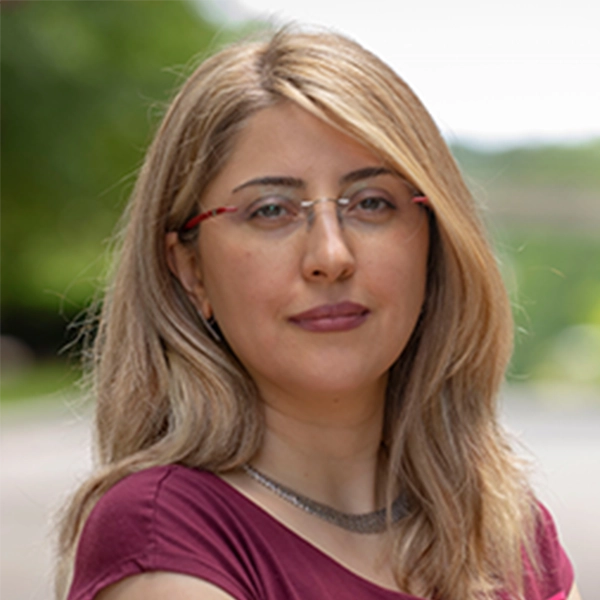
Dr. Sara Saberi
Business School, Worcester Polytechnic Institute, USA
Keynote Speeches
Business Continuity and Disaster Recovery Management
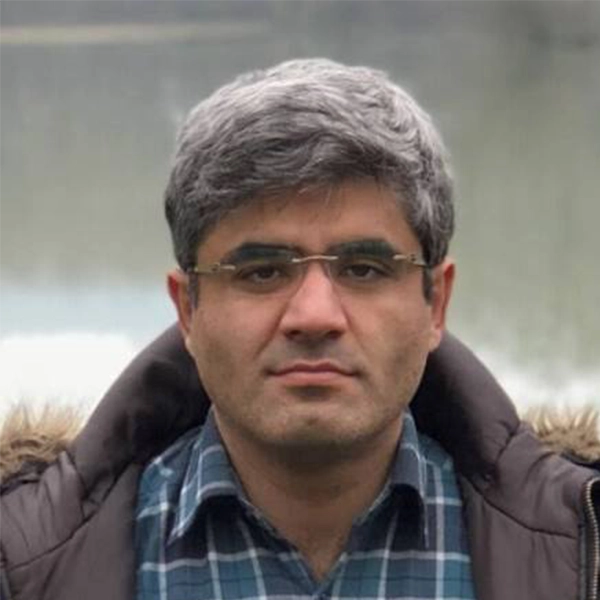
Dr. Reza Yousefi Zenouz
University of the West of England (UWE) Bristol, UK
Abstract
Businesses are highly vulnerable to various risks that can disrupt their operations and halt daily transactions. Maintaining business continuity amid these risks appears impossible without a comprehensive and effective plan. Organizations require systematic solutions such as business continuity management (BCM) to manage risks and improve resilience effectively. BCM is a crucial systematic plan to ensure the swift restoration of critical processes during unexpected disruptions. It helps organizations manage risks and sustain operations. Business continuity plans aim to resume critical business operations after disasters, meeting the minimum business continuity objectives (MBCO) within the maximum tolerable period of disruption (MTPD). BCM comprises two main parts meaning, business impact analysis (BIA) and risk assessment (RA). The lack of contextual understanding during risk assessment poses significant challenges for organizations. BIA, therefore, seeks to address this by analysing the organizational context and assessing how various risks affect business processes. On the other hand, two main steps of risk assessment are risk identification and risk analysis. The question is that how can we effectively identify the main events that could threaten the organization, how can measure and quantify them? Since usually there is not explicit objective data regarding risk elements, their evaluation is based on experts’ experiential knowledge. These judgments can be susceptible to cognitive biases and limited knowledge, often failing to precisely reflect the true situations. So, it is better to seek other sources of data; How data driven methods like text mining and Large Language Models (LLMs) can help us in this regard? And finally, how can we integrate the results of BIA and RA and propose a new hybrid framework for BCM? This framework could be called context aware risk management.