

Workshops
Workshops
Sustainable Development and Green Banking Transitions

Dr. Vani Nikhil Laturkar
Senior Professor, School of Commerce and Management Sciences, Swami Ramanand Teerth Marathwada University, Nanded, Maharashtra, India
Short Bio:
Prof. Vani Laturkar possesses an excellent track record in the field of academics; she remained at first rank with gold medals throughout her education from XII to PG. She joined University School of Commerce and Management Sciences, Swami Ramanand Teerth Marathwada University, Nanded, Maharashtra, India in 1995. She has contributed as Dean – Management Faculty, Officer-on-Special Duty for university academic planning and development, Coordinator RUSA, Institutional Director – Quality Assurance and Accreditation. She was instrumental in floating major policies for Start Up, IPR, Consultancy, Minor research project, Student mentoring and Research semester scheme and her University’s Institutional Developmental Plan 2025-2040.
With 44 international, 25 national, 15 book chapters and four book publications, 25 Ph. D and 11 M. Phil students awarded, five research projects are completed b her. She is the recipient of prestigious Fulbright Nehru Fellowship of United States – India Educational Foundation. The other is Ministry of HRD, GoI instituted LEAP fellowship attended at TISS, Mumbai and U-PENN, USA and AICTE-UKIERI Technical Leadership Development Program with Dudley’s School of Economics, U.K. She was also awarded with Best Teacher Award by S.R.T.M.U.N and Guru-Shreshta Award of Institute of Company Secretaries of India, New Delhi.
Abstract of the Workshop:
Green banking, which integrates environmental considerations into banking practices, is not just an ethical choice but a strategic necessity for world. This concept promotes environmentally friendly practices and reduces the bank’s carbon footprint by incorporating social, environmental, and ecological concerns into traditional banking practices. Green banking (GB) strategies are a set of financial practices and activities implemented by banks to encourage sustainability, environmental responsibility, and low-carbon impact. Green banking has moved from being a buzzword to a boardroom imperative.
In western nations, the idea of green banking was established. In order to safeguard the environment, Green Banking was formally launched in 2003. Then the Equator Principles (EPs) were introduced, and several of the biggest institutions in the world, including Citigroup Inc., The Royal Bank of Scotland, and Westpac Banking Corporation, first adopted them. To create a green bank owned by the US government, Congressman Chris Van Hollen of the USA submitted the Green Bank Act in March 2009.
Green banking is still evolving, with increasing efforts of government and the private sector to integrate sustainability into the financial system. The workshop will bring out the landscape of green banking practices evolved in the world.
Workshops
ESG in Digital Marketing – Strategies for Sustainable Growth
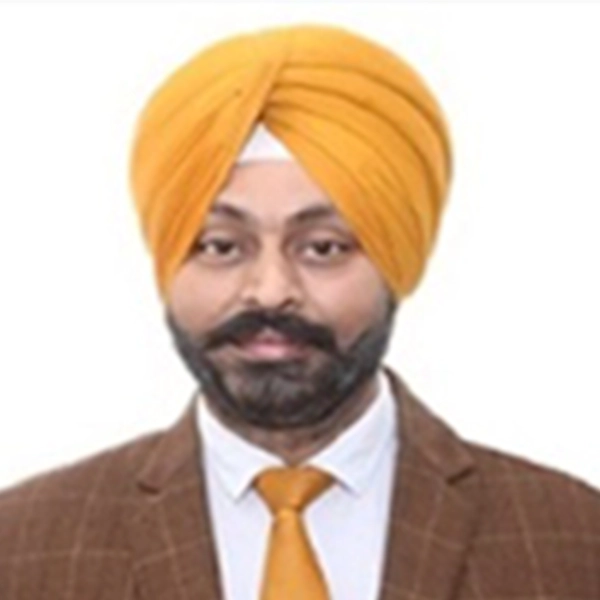
Dr. Simerjeet Singh Bawa
Professor, Chitkara Business School, Chitkara University, India
Dr. Simerjeet Singh Bawa is a distinguished Professor at Chitkara Business School, Chitkara University, Punjab, with over 17+ years of diverse academic and administrative experience. He has served in key leadership roles including Director, Head of Department, NAAC Coordinator, IQAC Member, Member of Board of Studies, Examination Superintendent, Placement Coordinator, and Patent Coordinator across reputed institutions.
An accomplished IPR talent, Dr. Bawa has filed 18 patents, of which 11 have been granted and registered, alongside 4 registered copyrights. He has published 38 research papers and book chapters in reputed journals indexed in ABDC, Web of Science, and Scopus. Additionally, he has authored 10 case studies featured in The Case Centre and written 3 academic books.
Dr. Bawa is also an approved PhD/DBA supervisor and has successfully guided numerous national and international scholars in their doctoral research. He is an editorial board member for several international journals and is a sought-after keynote speaker and guest lecturer at national and International academic forums. His primary research interests lie in consumer behaviour, customer satisfaction, digital marketing, and service marketing.
Abstract of the Workshop:
Environmental, Social, and Governance (ESG) principles are reshaping the landscape of digital marketing, compelling organizations to move beyond profit-driven strategies toward purpose-led growth. This paper explores how ESG integration within digital marketing frameworks can enhance brand reputation, strengthen stakeholder trust, and drive long-term sustainable performance. It examines how environmental responsibility (such as reducing digital carbon footprints and promoting sustainable products), social impact (including inclusive messaging, ethical data practices, and community engagement), and governance standards (transparency, compliance, and accountability in data usage) influence digital campaigns and consumer perception.
The study highlights the growing consumer demand for authenticity and responsible business practices, demonstrating how ESG-aligned digital strategies can create a competitive advantage while mitigating reputational and regulatory risks. By leveraging data analytics, responsible content creation, green advertising technologies, and transparent reporting, organizations can align marketing performance metrics with sustainability goals. Ultimately, integrating ESG into digital marketing not only supports corporate sustainability objectives but also fosters resilient, value-driven growth in an increasingly conscious and connected marketplace.
Workshops
AI-Driven ESG Strategy: Navigating the Future of Sustainable Engineering Management

Dr. Sameera Fernandes
CEO of Econova Global & Chairperson of the Dubai Stockbrokers & Investment Services Group (DSIG).
Workshops
Decision-Making under Uncertainty: Integrating Information Measures with Generalized Fuzzy Sets

Dr. Rajkumar Verma
Department of Applied Sciences and Humanities, Indira Gandhi Delhi Technical University for Women, India
His scholarly contributions include more than 91 research articles published in several prestigious international journals, such as the International Journal of Intelligent Systems, Expert Systems with Applications, International Journal of Uncertainty, Fuzziness and Knowledge-Based Systems, International Journal of Machine Learning and Cybernetics, Neural Computing and Applications, Informatica, Soft Computing, Cybernetics and Systems, Applied Soft Computing, and Applied Intelligence. He has also served as a guest editor for five international books published by Springer International Publishing. Additionally, he has been a co-chair of five international conferences organized in different parts of the world.
Dr. Verma has been recognized among the World’s Top 2% Scientists in the field of Artificial Intelligence by Elsevier and Stanford University (USA) for four consecutive years (2022, 2023, 2024, and 2025). He has also been listed among the top 2% of researchers worldwide for career-long impact in 2024 and 2025.
His research interests include information measures, aggregation operators, multi-attribute group decision-making, computational intelligence techniques, game theory, and computing with words.
This workshop focuses on the application of information measures, such as entropy, divergence, and similarity, within a generalized fuzzy environment for multiple-attribute group decision-making (MAGDM) problems. Information measures play a crucial role in quantifying uncertainty, determining attribute weights, and ranking alternatives effectively. By integrating these measures with generalized fuzzy sets (including intuitionistic, Pythagorean, and other extensions), more robust and flexible decision-making models can be developed.
The session will cover fundamental concepts of generalized fuzzy sets, various information measures, and their mathematical properties, followed by step-by-step methodologies for solving MAGDM problems. Practical examples and case studies from engineering, management, and social sciences will be discussed to illustrate real-world applicability. The workshop aims to equip participants with both theoretical insights and computational techniques necessary for handling complex group decision-making scenarios under uncertainty.
Workshops
AI-integrated pedagogy in Higher Education & Beyond
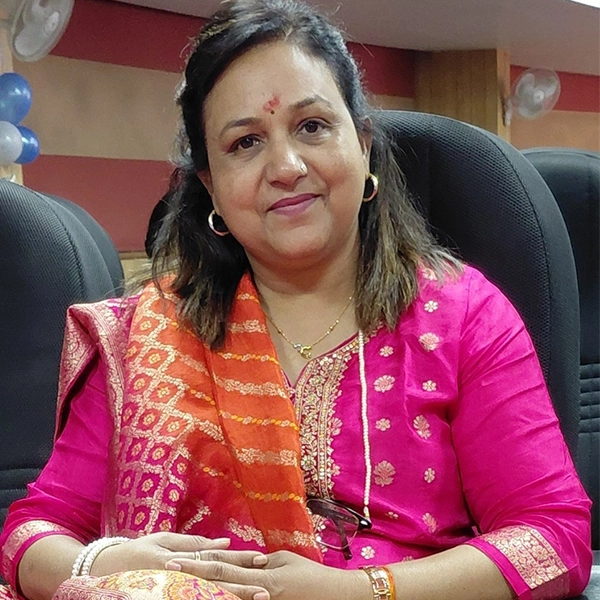
Dr. Meenakshi Kaushik
Academcian, Author & Researcher (17+ years experience